Interior Design Trends 2026: What's Actually Worth Trying
A grounded look at interior design trends for 2026 — which are worth adopting, which will date fast, and how to test any trend before you commit.
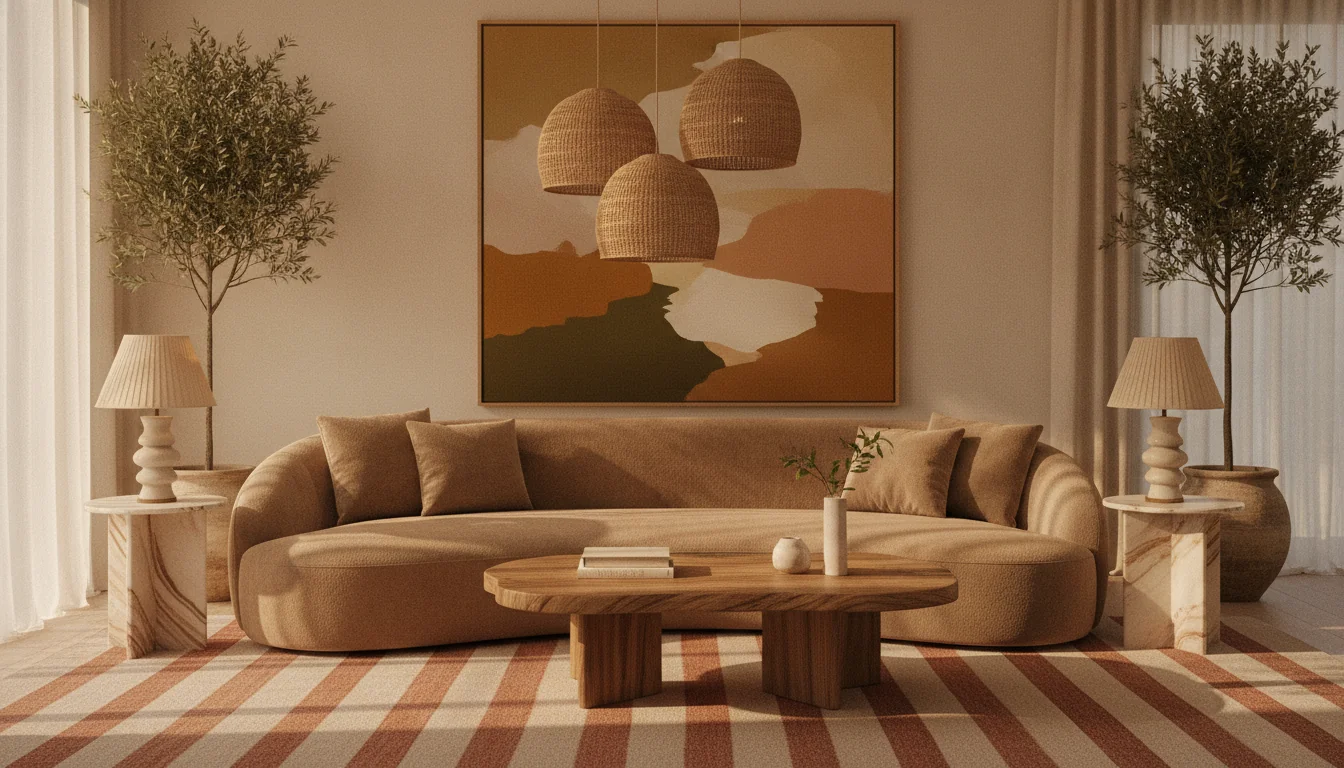
Every January, the trends lists arrive with the force of a weather system — new colors, new silhouettes, and a strong implication that your current living room is embarrassing. By March, most are forgotten. By June, the predictions that mattered are visible in real homes, and the ones that didn’t are already dated. The challenge isn’t finding out what’s trending — it’s knowing which trends are worth your money and which to let pass.
Interior design trends 2026 are an interesting batch because the signal-to-noise ratio is better than average. The trends gaining traction this year share a common thread: they’re material-led, not color-led; they prioritize warmth and texture over the cool minimalism of the late 2010s; and they’re durable enough to outlast the trend cycle itself. This guide covers the 2026 trends that actually deliver — and a framework for testing any trend before you commit.
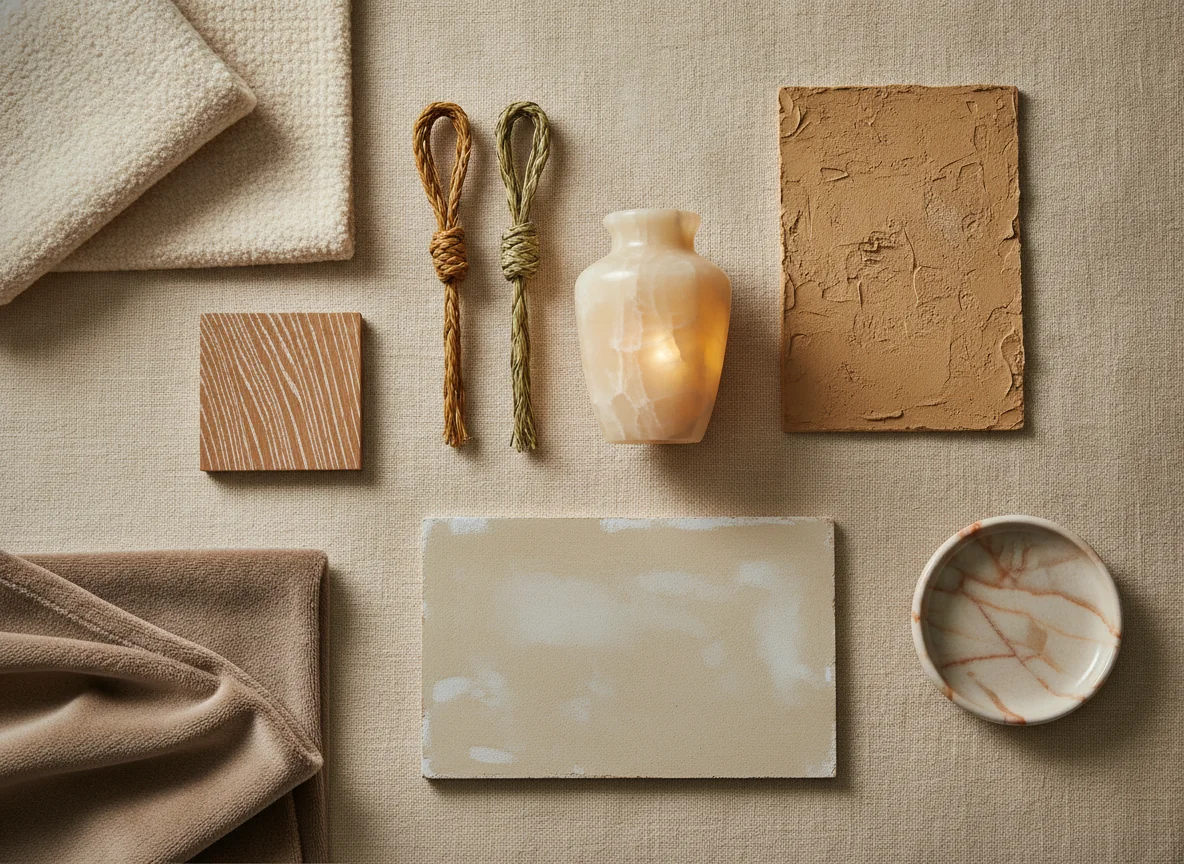
What are the interior design trends of 2026? The defining interior design trends of 2026 center on warmth, texture, and organic forms — a decisive shift from the cool-gray, sharp-edged minimalist aesthetic of the late 2010s and early 2020s. Key movements include: mushroom and earth-toned color palettes replacing gray and beige; bouclé and chenille as the defining fabrics; curved and organic furniture silhouettes; natural materials such as cerused oak, alabaster, and hand-troweled plaster; asymmetric open shelving; and a broader embrace of “warm minimalism” that prioritizes touch and patina over visual purity.
How to read a trends list without getting burned
The first skill worth developing is reading a trends list the way a chef reads a restaurant review: looking for what applies to you, not what’s universally “in.” A trend that works for a well-lit, open-plan loft may be a disaster for a north-facing, low-ceilinged apartment. Filter every trend through three questions before you spend a cent.
Does this trend solve a problem I have? The best design trends are responses to actual pain points. The shift toward warmer materials is a direct answer to the cold, uninviting interiors that pandemic-era minimalism left behind. The curved furniture trend addresses rooms that feel sharp and unwelcoming. If a trend doesn’t solve anything you’re experiencing, it’s decoration — and decoration is optional.
Can I test this with one room or one piece? The most dangerous trends require a full-home commitment. Bold accent walls are testable; replacing all your flooring is not. The 2026 trends worth adopting are the ones you can try in a single room or a single furniture piece and still get the full effect.
Does this trend have real roots, or is it a marketing push? A trend rooted in a real material — cerused oak, limewash, alabaster — has staying power. A trend rooted in a single product category is a sales push. The 2026 material trends are material-led, and they’ll still look good in 2028.
For a broader framework on evaluating design decisions, our how to design a room guide covers the principles that outlast any trend cycle.
Color trends for 2026
The color story of 2026 is a decisive departure from the cool grays and stark whites of the previous decade. The palette has shifted warm, deep, and earthy. The gray wall is finally over — replaced by colors drawn from the natural world.
| Color direction | What it replaces | Where it works best | Staying power |
|---|---|---|---|
| Mushroom and taupe | Cool gray | Living rooms, bedrooms, hallways | High — reads as warm neutral |
| Terracotta and rust | Blush pink | Accent walls, dining rooms | Medium — needs the right light |
| Sage and olive | Mint green | Kitchens, bathrooms, offices | High — natural, light-flexible |
| Warm neutrals (cream, oat, limestone) | Stark white | Everywhere | Very high — neutral upgrade |
| Deep aubergine and plum | Navy | Powder rooms, libraries | Medium — commitment-heavy |
| Burnt orange and ochre | Mustard | Accent pieces, textiles | Medium-high — pigment-rich |
Mushroom and taupe are the most significant color shift of 2026. They’re not new — they’re a warmer, more complex version of gray that adds enough brown and red undertone to read as warm and enveloping. The shift is subtle enough that most visitors won’t name it, but they’ll feel the difference. It’s the single highest-impact, lowest-commitment trend you can adopt.
Terracotta and rust are the accent colors of the year — on accent walls, in textiles, and in tile. The key is to pair them with warm neutrals rather than bright white. A terracotta wall reads as intentional next to cream, and as a “trendy color” next to white.
Sage and olive are the most popular green tones for kitchen cabinetry and bathroom vanities. Unlike earlier mint greens, they’re muted enough to read as neutrals. They pair well with warm wood tones, brass hardware, and cream countertops.
For more on building a cohesive palette, our decorating color schemes guide walks through the full pairing logic.
Material and texture trends
The overarching theme of 2026 is the return of texture. After a decade of smooth flat-panel cabinetry and polished surfaces, the trend has swung decisively toward materials that reward touch and show their making.
Bouclé and chenille. The defining fabric of 2026 is bouclé — the looped, nubby wool textile that has taken over furniture upholstery. A bouclé sofa or armchair is the single most effective way to bring texture into a living room. It’s warm, forgiving, and reads as simultaneously luxurious and casual. Chenille, with a softer brushed pile, is the alternative for bedrooms and upholstered headboards.
Cerused oak. Oak with the grain opened and filled with white or gray pigment has emerged as the wood finish of choice. It replaces the honey oak and walnut that dominated the 2010s. Cerused oak reads as organic and architectural at the same time — the pronounced grain pattern gives it texture while the pigment keeps it from feeling rustic.
Hand-troweled plaster and limewash. The trend toward “raw” wall finishes continues. Venetian plaster and limewash paint produce surfaces with depth and light variation that drywall can’t match. For renters, limewash paint is a fraction of the cost and produces a similar mottled effect.
Alabaster and natural stone. Alabaster — the translucent, veined mineral — is the 2026 material for side tables, lamp bases, and decorative objects. It’s warmer to the touch than marble and carries a glow when backlit. Alabaster-veined resin alternatives capture the look at a fraction of the cost.
Woven pendants. Abaca, rattan, and seagrass pendants are being used singly over dining tables and clustered in living rooms. They’re an inexpensive way to add texture and warmth, and they work in any existing decor.
For more on how material choices affect a room, our interior design tips for beginners guide covers the relationship between texture, light, and spatial perception.
Furniture and silhouette trends
The furniture silhouettes of 2026 reject sharp, angular forms in favor of curves, softness, and organic lines.
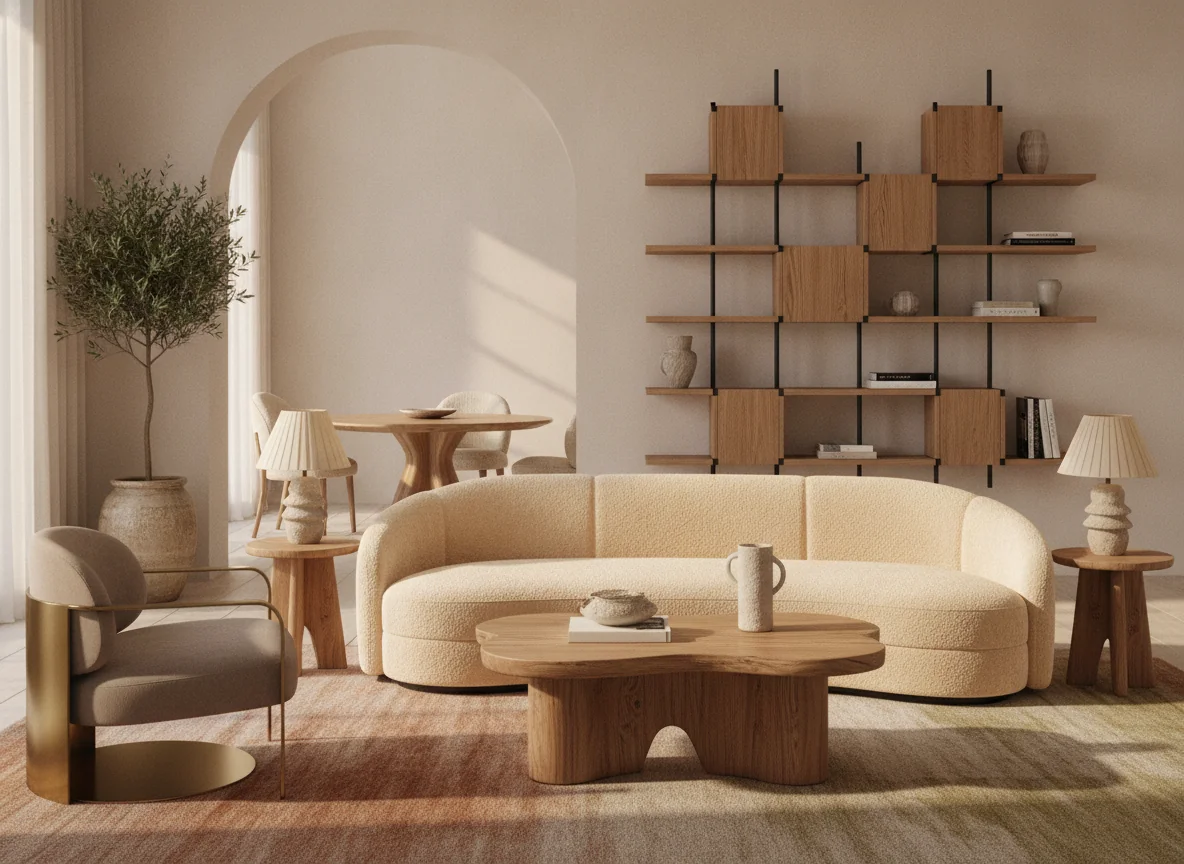
Curved sofas. The straight, boxy sofa is being replaced by curved and rounded forms with continuous, sweeping backs that wrap around the sitter. A curved sofa softens the geometry of a rectangular room and creates a sense of enclosure. Modular sectionals with rounded corners are the practical alternative for larger spaces.
Organic-form coffee tables. The 2026 coffee table is free-form — a slab of cerused oak or natural stone cut into an organic shape, often with a live edge or sculptural base. It’s the counterpoint to the rectilinear sofa and introduces a visual break that makes the room feel composed rather than assembled.
Pedestal dining tables. The four-legged dining table is ceding ground to the pedestal base. A single column in cerused oak, stone, or brushed brass supports a round or oval top, freeing up legroom and creating a cleaner line. The trend extends to sideboards and buffets, which are moving toward rounded, curved forms.
Asymmetric shelving. Wall-mounted shelving has moved from single floating planks to asymmetrical, multi-level compositions. Groups of shelves at different lengths and depths create wall-mounted sculpture that also holds books and objects. The trend is strongest in living rooms and home offices.
The statement armchair. A single sculptural armchair in bouclé or velvet on a visible brass or black metal base sits apart from the sofa as a deliberate accent. It’s the easiest way to adopt the 2026 silhouette trends without replacing everything.
Trends that will date fastest
Not every 2026 trend deserves space in your home. The trends below are most likely to feel dated by 2028.
Biophilic maximalism. The combination of maximalist plants, maximalist patterns, and maximalist object display is already showing signs of overcorrection. The problem is maintenance: a room with thirty plants, seven patterned textiles, and fifty objects takes more time to keep looking good than to look bad. By 2028, the survivors will be rooms that picked one element — either the plants or the patterns — and let the other be neutral.
Dark academia. The wood-paneled, bookshelf-dense aesthetic is fading. It looks intentional in a room with high ceilings, original moldings, and a fireplace. In a standard 8-foot-ceiling drywall box, it looks like a costume. The trend will survive in libraries and older homes but is declining as a general living-room look.
Brutalist concrete. The revival of raw concrete as an interior finish is the trend with the shortest shelf life. Concrete is cold, heavy, and the material equivalent of the gray walls that the warm-material trend is rejecting. As a residential trend, it’s already on the way out.
Checkerboard tile. The checkerboard floor and geometric backsplash that defined the early 2020s is the most visually dated element. The 2026 alternative is larger-format tile in warm earth tones with texture taking the place of pattern.
Statement word art. Large-scale single-word metal or neon signs — “HOME,” “VIBES” — are the 2026 version of the 2010s “Live, Laugh, Love.” It’s the fastest-identifiable trend in any room and will date faster than any other decor choice.
For more on what separates lasting style from passing trends, our modern minimalist home decor guide covers the principles that survive the trend cycle.
Trends worth adopting now
The trends most worth investing in are rooted in timeless principles: warmth, texture, natural materials, and thoughtful proportions.
Warm neutrals on walls. Repainting from cool gray or stark white to mushroom, taupe, or cream is the highest-impact, lowest-commitment move you can make. The cost is a weekend and a gallon of paint. The effect is a room that feels warmer and more finished. This isn’t a trend — it’s a correction of the decade-long overuse of cool grays.
One bouclé piece. A bouclé sofa, armchair, or ottoman is the most effective single-piece investment. The fabric is warm, tactile, and reads as luxurious without being flashy. A single bouclé piece anchors a room, and it won’t look dated in 2028 — it will look like a classic.
Curved silhouettes. One curved piece in a room — a curved sofa, a round coffee table, a pedestal dining table — softens the geometry without requiring a full redesign. The curve won’t date quickly because it’s rooted in the same principle that makes archways timeless: the human eye finds curves more restful than right angles.
Woven pendants. Replacing a ceiling fixture with a woven abaca, rattan, or seagrass pendant is the fastest, cheapest way to add warmth. Under $200, an hour to install, and the effect is immediate.
Cerused oak furniture. A single piece — a coffee table, a media console, floating shelves — brings the 2026 wood trend into a room without a full replacement. The finish is distinctive enough to read as intentional and neutral enough to work with any existing decor.
How to test any trend before committing
The most practical realization of the 2026 trends cycle is that you don’t have to guess. AI tools that redesign a room from a photo can show you how a trend looks in your specific space before you buy paint, fabric, or furniture.
Test a color trend. Upload a photo of your room to an AI design app, specify the wall color you’re considering, and see how it interacts with your specific light, furniture, and floor. Most people discover that the color they loved in a swatch looks wrong in their room — or that the color they almost dismissed looks perfect.
Test a furniture silhouette. Ask the AI to replace your sofa with a curved bouclé model or your coffee table with an organic cerused oak slab. The render shows the piece at scale in your room — not on a white background. The curved sofa that looks perfect in a catalog may overwhelm a small living room; the render shows you that before you spend.
Test a material trend. Ask the AI to apply limewash walls, cerused oak shelving, or bouclé upholstery to your room. The render answers a question most showrooms can’t: how the material reads in your specific context.
Test a whole-room trend. Apply a complete trend package — warm neutrals, curved furniture, woven pendants, bouclé seating, cerused oak surfaces — to see the full effect. The whole-room render is the fastest way to decide between a full commitment and a single accent piece.
The most sustainable design habit of 2026 is previewing before you buy. Our ai interior design guide covers the full workflow, and the ai interior design app companion post walks through the specific features that make trend-testing practical.
FAQ
What is the biggest interior design trend for 2026?
The shift from cool, gray, minimalist interiors to warm, textured, organic spaces. The defining material is bouclé; the defining color shift is from cool gray to warm mushroom; the defining silhouette is the curve. The combined effect is a room that feels more enveloping and more tactile than the interiors of the previous decade.
Is gray still in for 2026?
Cool gray is not. Warm grays — mushroom, taupe, greige, stone — read as warm neutrals and are very much in. If you already have gray walls, adding warm-toned textiles and wood furniture can shift the room’s temperature without repainting.
What colors are replacing gray in 2026?
Mushroom, taupe, cream, limestone, and oat are the warm neutrals replacing cool gray. Terracotta, rust, sage, and olive are the accent colors replacing blush and mint. The 2026 palette is earth-toned and pigment-rich, drawn from soil, clay, stone, and foliage.
Are open shelves still trendy in 2026?
Yes, but the trend has shifted from single floating shelves to asymmetrical, multi-level compositions at different heights. The strongest application is in living rooms and home offices, where the shelf replaces both the media console and the wall art.
What furniture style is in for 2026?
Curved, soft, and organic. The straight, boxy furniture of the 2010s is being replaced by curved sofas, pedestal dining tables, organic coffee tables, and sculptural armchairs. The dominant material is cerused oak; the fabric is bouclé. The style is best described as “warm minimalism.”
How can I update my home for 2026 without spending much?
Three low-cost moves: paint one wall in a warm neutral; replace one ceiling fixture with a woven pendant; and add one tactile textile — a bouclé throw, a chenille cushion, a wool rug — in a warm earth tone. Total cost under $300. Preview each change with an AI render before buying.
Should I follow trends at all?
Only if they solve a problem you have or improve a room you use. The most confident interiors borrow from trends selectively — the warm palette but not the statement armchair, the bouclé sofa but not the full furniture replacement. The goal is a room that looks like you, made slightly better by what’s current.
Test any 2026 trend on your own rooms before you buy in
The 2026 trends cycle is a good one — warm, textured, material-led. But no trends list can tell you whether mushroom walls work in your north-facing living room, or whether a curved bouclé sofa fits your floor plan. The only way to answer those questions is to see it in your room.
Roomagine is the AI room design app that lets you test any trend on your actual rooms from a single photo. Upload a shot of your living room, dining room, or bedroom, pick a trend package or describe your own, and the app returns a full render in about ten seconds. Try the warm neutral palette, the curved silhouette, the bouclé sofa, the cerused oak coffee table, or any combination you can imagine. The free tier covers your first few renders. Download it on the App Store or Google Play. Test any 2026 trend on your own rooms before you buy in — it’s the most sustainable design habit you’ll develop all year.